Monday, January 14, 2019

The art of picking a great book...

How do you choose a really good book to read?

... do you defy all advice and judge it by it's cover?


... do you search the backcover for an interesting storyline?

It is 1948 and a newly-married Hortense Joseph has just arrived, from Jamaica, with high expectations of life of in London. But London has suffered many years of war and does not measure up to her storybook notions. Along with her irrepressible husband, Gilbert, Hortense rents a room in the home of Queenie Bligh, whose husband still hasn’t returned from the war. Queenie’s neighbours are unhappy that she taken in Jamaican lodgers but she has other things on her mind.

... do you fall in love with a great character and have to read more?
“Now, the man that answer the door was not Winston. True, him look like Winston, him talk like Winston and him dress like Winston. But Winston was half a twin. Identical as two lemons on a tree. This was his brother Kenneth. To tell him apart, try to borrow a shilling. Winston will help you out but pester you all over London till him get it back. Kenneth, on the other hand, will persuade you to give him a shilling, assuring you that he could turn into into a pound before the week's end.” -- Gilbert Joseph

However you choose your books, come browse the fiction shelves in the library. We have a world of different covers and plotlines and characters.

Just the thing you need to relax during the inter-semester break!

Monday, January 7, 2019

5 things to remember when sitting exams...

Exams are a stressful time!  Having a plan before you go into the Exam Hall can help.  Here are some of the things you can plan for:


1. Read the exam paper slowly and carefully.  Ensure that you understand the instructions before you start writing.

2. Look at the points available for each question, or part of a question, e.g. if there are three questions - worth 20%, 20% and 60% - you need to plan to spend most of your time on the last question.

3. Answer the question that was asked.  Sometimes it can be tempting to write down everything you know about a topic.  It is important to read the question carefully and answer what was asked.  Look at directive words, e.g. are you being asked to list information, to describe a theory or an idea, to evaluate a concept & give your opinions...

4. Plan your answer before you start writing.  Jot down your ideas, on a separate sheet of paper, and consider how you are going to structure your argument.  What order will you put your ideas in?  Does your introduction include all your main ideas? Is your argument clear and logical?  (if you must submit this piece of paper, write "rough work" at the top of the page and the marker will understand that it is not part of your answer).

5. Leave time to re-read your answers.  Leave 10 minutes or so to re-read your answers before you finish.  This will allow you to catch any obvious mistakes.  Reviewing your work reduces the number of spelling and grammar mistakes, and allows you to change any obvious errors.  This makes a good impression on the marker.

... and if you "blank"?  Don't worry.  First of all, this happens to lots of people!  Take a deep breath and jot down any relevant information, no matter how basic it seems.  Jotting ideas down often reminds you of how much you know and stimulates related thoughts!

Friday, January 4, 2019

Happy weekend!

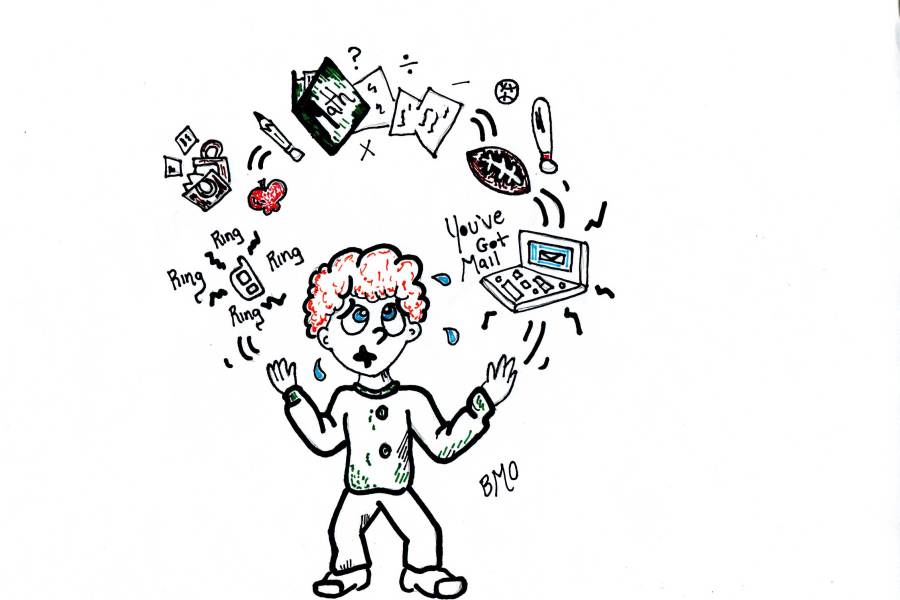
Well done to everyone who sat an exam this week.  Do you need to fit in some revision time this weekend?  If so, consider scheduling your time so that you can fit in time for both revision and relaxation.


Image result for student juggling

Decide on specific study times 
Find a place to study that is separate from the place where you relax or socialize.  Try to minimize the distractions in your study space by, for instance, leaving your phone outside, switching your internet connection off while studying etc.  Learn to single-task, i.e. focus on your studies during study time to help with concentration and memory.

Take your breaks
It is important to take regular short breaks while you study.  This helps you to focus fully while you are studying and to relax fully while you are not.  When you are not studying try not to think about it.  Evidence shows that eating, sleeping and exercising well contributes to effective study.

Thursday, January 3, 2019

Adapting to handwritten exams

In our everyday lives, most of us type more than we write. Students, in particular, often do most of their coursework on computers. So, how can we adapt to hand-written exams?


Here are four things to remember:
  1. Hand-writing requires a little more planning. Typists often start writing straight away; they know that they can edit the document later. It is more difficult to edit hand-written scripts. Therefore, writers must be organised! Before you pick up a pen, take the time to plan your answer. Jot down your ideas on rough paper and structure your argument before you start.
  2. Hand-writing can be a slower process than typing. Rest assured that your marker is aware of this! A written exam probably won't resemble a typed assignment, so don't expect it to. However, the slower speed of writing gives you a little more time to think as you write, which allows you to edit-as-you-go.
  3. Some of us have ferocious hand-writing! Although most markers are understanding of poor hand-writing, they must be able to read and understand your work in order to mark it. As you write, ensure that your writing is legible. Bring a couple of pens into the exam hall in case one leaks.
  4. In exams we need to correct our own spelling and grammar. As part of the planning and edit-as-you-go process, we must be conscious of our spelling and grammar as we write. If you are unsure of a spelling, jot it down on rough paper; sometimes correct spellings are more recognisable when written down. And leave a little time at the end of the exam to re-read your paper; this is a great way of catching obvious errors.
Best of luck to everyone sitting an exam today!

Monday, November 5, 2018

Are you doing a research project this semester?


Do you have an important project to complete this semester? Are you starting to do original research? Compile a literature review? Conduct interviews? Learn about quantitative and qualitative research methods?


If so, there are lots of books in the library that can help you. As research is such a broad topic, these books are shelved in various places. Have a look at some of the examples below or search the library catalogue.

General Research

Research Methods

Writing up your Research


Business


Engineering

Social Care

Sports Management


Friday, September 28, 2018

Music to our ears...

It's a beautiful Friday morning here in ITB and the weekend is on its way.  Like music to our ears...  If you have a few minutes to kill, this fantastic TED-Ed video is worth a look.  The Art of the Metaphor:

Thursday, September 27, 2018

Borrowing library books is child's play!


Have you borrowed a library book yet?  If not, here is some useful information!

What do you need?
You just need your student card.  Your student card is also your library card, and you are automatically a member of ITB Library when you start college.  Just come to the library desk with your student card and the book you wish to borrow.

How many books can you borrow at a time?
Students can borrow up to 8 books, or items, at a time.  As well as books, you can borrow films on DVD, laptops, calculators, headphones etc.

How long can you borrow items for?
Most text books can be borrowed for 2 weeks at a time; these are long loans.  
In order to make the library books accessible to as many students as possible, some loan periods are shorter.  At the start of each term we ask your lecturers to recommend core texts for short loan.  The first copy of each recommended title is library use only; these books cannot be borrowed but they are always available in the library.  All other copies of the title are short loans; they can be borrowed for 1 week at a time.

What if you want a book for a little longer?
When a book is returned late, or after the due date, there are overdue fines.  Avoid this by renewing your books on or before the day that they are due to be returned.  We will renew your books up to 5 times so long as no other student has reserved them and they are not late.  Laptops and other equipment cannot be renewed.

Still have questions?  Email us at libraryinfo@itb.ie 


Wednesday, September 26, 2018

Banned Books Week 23 - 29 September 2018


Banned Books Week was first initiated by the American Library Association in 1982 in response to an increasing number of challenges in the US to books in schools, bookstores and libraries.  In the United States books are regularly banned and challenged within school districts. Harry Potter by J.K. Rowling is regularly challenged and banned, with reasons cited including anti-family, occult/Satanism, religious viewpoint and violence. The Harry Potter series was also banned in St. Mary's Island Church of England school in Chatham, Kent. 


In the United States banning is usually limited to libraries and schools, Irish censorship laws prevent the import, sale or distribution of prohibited publications. The Censorship of Publications Act, 1929, was enacted to prohibit the sale and distribution of “unwholesome literature”. Violations to the terms of this act could result in a fine of £50 or a prison sentence of up to 6 months.

Source: American Library Association

In 1946 the Minister for Justice introduced an appeals board, this allowed for some banned books to become available. As a result over 130 books were appealed however this was a largely symbolic victory as most of the books were out of print when the ban was lifted. Despite the introduction of the appeals process the 1950s saw a resurgence of books being banned, with a staggering 1,034 books banned in 1954 alone.

Some of the books that were banned in Ireland include:

I am alone by Walter Macken 

Catcher in the Rye by J.D. Salinger

Brave New World by Aldous Huxley

The Grapes of Wrath by John Steinbeck

Borstal Boy by Brendan Behan

Most of these books were banned as soon as they were published. The Censorship Board was not required to explain why a book had been banned. However most were probably banned due to one or a combination of the following reasons; critique of Irish republicanism, critique of the Catholic Church, offensive language, or depiction of sexuality. 

Luckily these books are no longer banned in Ireland and are available in your library! Check out a banned book today ...


Bibliography and further reading:

American Library Association Banned Books page http://www.ala.org/advocacy/bbooks

Censorhip, Notre Dame University Available at: https://sites.nd.edu/irish-hesburgh/censorship/

Censorship of Publications Act, 1929 http://www.irishstatutebook.ie/eli/1929/act/21/enacted/en/html?q=censorship

Censorship of Publications Act, 1946 http://www.irishstatutebook.ie/eli/1946/act/1/enacted/en/html?q=censorship

Diaz, Eleanor and James LaRue 2017, "50 Years of Intellectual Freedom
The ALA Office for Intellectual Freedom celebrates its history" available at https://americanlibrariesmagazine.org/2017/11/01/50-years-office-intellectual-freedom/

Donal Ó, D 2005, ''The best banned in the land': Censorship and Irish Writing since 1950', The Yearbook Of English Studies, p. 146, JSTOR Journals, EBSCOhost, viewed 13 September 2018. http://search.ebscohost.com/login.aspx?direct=true&AuthType=ip,sso&db=edsjsr&AN=edsjsr.3509330&site=eds-live&custid=ns122646

Ross, Samuel, Harry Potter Banned? Why do some parents want to ban the world's favorite wizard?available at: https://www.infoplease.com/harry-potter-banned

Tuesday, September 18, 2018

Opening hours in September

Welcome back to all our returning students.  It has been very quiet without you!


This week, the library and student information desk (SID) will open from 9.15am - 5.00pm each weekday.
The library's late opening resumes from Monday 24th September.


Monday, September 17, 2018

IT induction labs for first years

Congrats to all the first years who attended IT induction sessions today.  This is a quick reminder of some the online resources you need to know how to acces:


Register for password recovery: it is important to register for password recovery while your password is active, i.e. now! 


Student email: your lecturers, administrators and peers will use this email account to contact you.  Check it regularly!
  • Login here: https://www.outlook.com/student.itb.ie
  • Your student email address is your user name, eg. B01000000@student.itb.ie
  • Your password is the network password you set the first time you logged in

Timetable: your timetable may change in the first few weeks of term.  Login to check for changes regularly.


Wednesday, September 12, 2018

ITB Student Hub

Are you starting college this week?  Did you know that your library contains a hub of information and services centred on student needs?  The library desk, the student information desk (SID) and the computer services helpdesk are all located in the library building.

http://itbstudenthub.ie/


In addition, you have 24/7 access to the ITB Student Hub: a website dedicated to sharing all sorts of information that is relevant to you! 

from passwords to parking to printing ...
from email to exemptions to electives ...
from letters to lockers to library databases ...

If you have any suggestions for content, let us know!  LibraryInfo@itb.ie 

Tuesday, September 11, 2018

Library tours


We have lots of library tours today!  Welcome to first year students in Community and Youth Development, Early Childcare Care and Education  and Applied Social Studies.  We are enjoying showing you around the library as part of your Induction...

Did you know that your student card is also your library card?  Don't forget to carry it with you at all times.


Monday, September 10, 2018

Welcome!

A big welcome back to all our new and returning students.  We hope you had a great summer!  We look forward to meeting all incoming first years during library tours this week, especially the International students who start today.

Fáilte, Valkommen, Vitejte....  Let us know how to say "Welcome" to you...


Friday, May 4, 2018

Study Tips


Study Tips


With the summer exams drawing near here are a few study tips that are found useful when preparing for your exams!

Choosing your study space

Study in an area with no distractions and less likely to have traffic passing through. For example studying in your bedroom or a room that isn’t regularly used would be better that using a kitchen or sitting room for your study space.


Organize your study area

Make sure the area you have chosen has enough space for you to spread out your notes, past exam papers and textbooks. Ensure that there is sufficient lighting but not over powering and that you have a comfortable chair as you could be sitting in it for long periods of time!
From experience it is best to have your notes written out or printed and turn your computer or laptop off. Some people find it easier to study with a neat and tidy study space or some are more comfortable in a cluttered space, figure out what suits you best to help you achieve the most from your time studying.


Create a schedule

When studying it is recommended to create a schedule and try your best to stick to it. To start look at what dates your exams on and then figure out what order you would like to study your exam subjects in and how much time you would like to allocate to each subject. You could also allocate time to study for each subject based on your confidence of current knowledge of the subject or if an exam is worth a higher grade than another.


Creating notes/flow-charts/diagrams/mind maps

Looking over full subject notes can be overwhelming! Write out what you know and then see where you have gaps in your information and begin gathering and structuring that information. Take your subject notes, identified gaps of information and break then write them down in whatever way you think is best suited to your information retention – you could use:
  • Notes – points and information written in short hand as a memory aid.
  • Flow-charts – a diagram that shows a sequence of information involved in a topic.
  • Diagrams – a simple drawing showing information in a schematic representation.
  • Mind maps – is a diagram which is used to present information visually, around a topic.


Analyze past exam papers

An effective way of preparing for your exams is using past exam papers. Analyze what questions or topics repeatedly come up and how the questions are asked, as well as breaking down the marking scheme for each question so you can allocate the appropriate amount of time for the marks awarded. 

Analyzing past exam papers allows you to see the wording that lecturers use for their questions so you don’t waste time analyzing them in your exams.
*Ensure that you check with your lecturer if the same structure is being used for your exams as previous years and that it isn’t a different lecturer writing the paper.


T/Preach others

Use family members, friends or other halves as study aids! Give them sample questions to ask you and your notes to ensure you are giving them the right information back! By explain an answer to them it allows you to produce the information in the right order and in a way that makes sense to others. This method also shows areas that may need more attention and focus during your study time.


Saying information out loud means you’re absorbing it in two ways – by seeing it and hearing it!


Take breaks

Taking breaks during study sessions aids your brain in retaining information more effectively and can also help improve your concentration and motivation during study. Follow these simple steps during your study sessions to make them more effective:
  • Take a break every 35-40 minutes
  • Allocate the amount of time for your break (10 minutes is ideal)
  • Change your scenery when on your break
  • Use physical activity in your break – stretch, walk etc.
  • Know your procrastination habits – for example avoid social media till you are finished studying as you could let time slip by.


Nourish & hydrate your brain and body

Though it is best to nourish your brain and body with food this doesn’t mean any food. Avoid foods that have a high sugar content as your body and brain will crash an hour later! In take foods that have been proven to aid concentration and memory when studying, foods that are high in omegas such as oily fish, nuts and seeds. Eggs, vegetables and fruit are also good foods to intake during study and exam time.
On exam day make sure to have a good meal before your exam of foods that slowly release energy, in the morning you could have porridge or the afternoon you could have pasta or rice, once again make sure to avoid sugar!


It is vital during your study time and that during your exams that you stay well hydrated by drinking plenty of water so that the brain functions to the best of its ability. Some people drink coffee as a way of hydration and to keep more alert, however this affect varies between individuals and the amount of caffeine they intake.


Exam day

Ensure you are prepared for your exam by of course studying, but also ensuring you have the day planned out, by:
  • Planning your route and travel time
  • Checking all the rules and requirements of the exam
  • Location of your exam
  • Having all your pens and stationery prepared for the exam

Relax

You’ve done all that you can so during your exam there is no need to stress yourself out, so to stay calm and relaxed you could:
  • Practice positive self-talk - tell yourself you are prepared and you can do this, banish negative thoughts.
  • Don’t worry about others - don’t look around and worry what other people are doing, if needed close your eyes for a few seconds and take some deep breaths.
  • Comfortable clothes - remember your exam isn’t a fashion show, make sure you wear comfortable clothes on the day.
  • Posture - keep your feet grounded to avoid fidgeting, and ensure your arms and hands are relaxed and don’t clench your pen. Sit back in your chair and have your shoulders open to avoid a tense back from hunching over.


Good luck in all your exams and remember the library is open during exam time 
Mon to Thurs 8:30AM to 8:00PM and Fri 8:30AM to 5:00PM.

Thursday, May 3, 2018

"Need A Break" Competition Winners


“Need A Break” Competition Winners


We recently held a competition here in the library to create a comic book strip, to encourage creativity and for students to take study breaks during this busy time in the semester.


We would like to thank all the students who entered!

The WINNERS of the competition were Krzysztof and Kayode with this entry:


We would like to give a special mention to the entries we received from Our Daughters of Charity students, who put a lot of time and effort into their entries and the stories that accompanied them.  Please see their entries below.

Cian's entry place 2nd in the competition:


The following entries were runners-up:

Darragh


Lee

Stephen Lee
Roisin


Romalej


The Daughters of Charity Students were very pleased when collecting their prizes this week!


Congratulations to all who entered and make sure to keep an eye on the blog and the library Facebook page for more competitions in the future!


Tuesday, April 10, 2018

Upgrade!


There will be some disruption to library services today as we upgrade our library system.  We will endeavour to ensure you can borrow and return books as normal, however our self-issue system will not be in use.  Also, we will not have access to the library catalogue today.

We apologise for any inconvenience this may cause and look forward to bringing you an improved library service!  Any questions, contact us at libraryinfo@itb.ie or 01 8851047.

Thursday, March 15, 2018

Opening hours

We wish everyone a fun St Patrick's Day Weekend.  Please note that the library will be closed on Monday 19th March.

And these are our Easter Opening hours....